MLF: When did you start working with MLF and what is your role?

CA: I started working as the Nursery Liaison with Maple Leaves Forever in November 2020. In my short time with the organization, I’ve been able to connect with our Ontario nursery growers to ensure that the Native Maples being planted as part of our program are of the highest quality and grown from locally sourced seed. I have also worked to bring on a new nursery partner to help expand our message and availability to a wider area of Ontario. Apart from working with our Ontario growers, I also help answer questions and provide advice to landowners regarding pest and disease issues as well as maintenance and care inquiries.
MLF: What attracted you to our organization?
CA: The symbol of our country, the maple leaf, has always been a source of pride for me and gives me a feeling of connection with others. When I learned about MLF’s initiative of promoting the planting of our Native Maple species, I knew it was important work that was worthwhile pursuing. As climate change and invasive species continue to plague our natural environment, it is even more important to advocate and support the survival of our native tree species. This helps support life for our insects, birds and small rodents, allowing for a healthy and diverse ecosystem.
MLF: What has been the most interesting thing you’ve learned/done working with MLF?
CA: One of the biggest issues I have been working on with our nursery growers, is working to promote the use of locally sourced seed. This means that the Native Maples grown in our nurseries come from seed that was collected from a known and local source. Growing trees from seed collected in a similar seed zone or eco-region, we can ensure a better chance of maximum growth and can minimize risk. Meaning that if the trees planted are grown from seed collected from dissimilar areas, there is a possibility of heat stress or winterkill, frost damage, reduced growth as well as an increase in insect and disease problems. By working with our nursery growers to promote the practice of using locally sourced seed, we can help ensure the Native Maples planted in our landscapes have the best fighting chance at survival.
MLF: MLF has a team of part-time employees, most of us have other jobs. What other roles/jobs do you have and how do they relate to MLF?
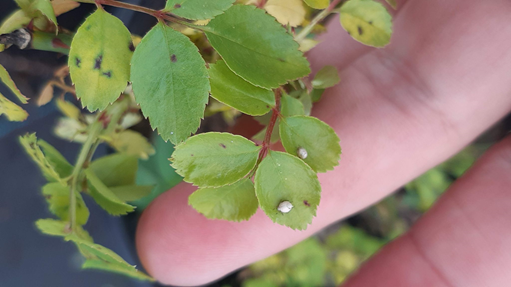
I currently work at NVK Nurseries as the Integrated Pest Management (IPM) Specialist as part of our Plant Health Team. Much of my work consists of scouting, monitoring and advising our growers on pest and disease issues. As the name suggests, the management of pests and disease must be of an integrated approach. So in practice, it means not jumping to chemical or pesticide intervention as the first and only option. I look at the bigger picture to determine what other changes can be made to reduce the damage, or eliminate an issue. For instance, changing the way a crop is being irrigated to reduce leaf diseases, pruning back a particular crop to remove an aphid infestation instead of spraying, or bringing in biological agents to combat a certain pest. The use of beneficial insects is a big part of how I work to manage the pests in our greenhouse environments. There are even biological pesticides that can be used to manage certain diseases that are not harmful to these beneficial insects. One of the biggest factors in my decision making process is to reduce the risk of harm to both the environment and our employees. Along with pest management, I work with our soil scientist on many research trials that look at improving our field soils in order to grow the healthiest highest quality trees. Some of this work involves building and maintaining compost windrows, experimenting with various cover crop recipes, using compost tea to increase microbial life in our soils, as well as working towards reducing synthetic fertilizers and pesticides. Sustainability is the driving force behind our research and decision making. As you can tell there is a lot on the go! Everyday is a surprise; from researching a new pest or disease, to trying out a homemade garlic spray, to releasing swarms of ladybugs in the greenhouse. This work provides me with so many opportunities to learn about plant health in a variety of environments as well as first hand knowledge of the challenges faced by our nursery growers.
Do you have a favourite tree (either specific tree or species) Why?
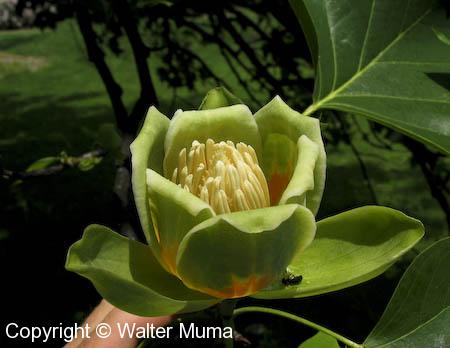
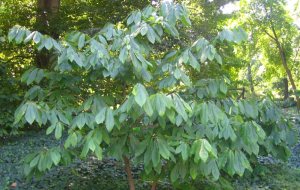
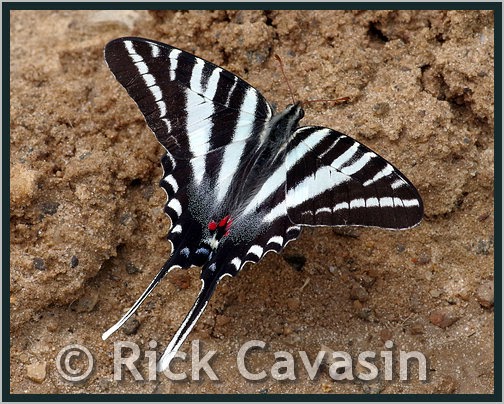
I must admit, it is impossible for me to pick a favourite tree, shrub, perennial, evergreen, groundcover etc… There are just so many beautiful creations in the world, and it is easy to find something amazing about each and every one. However, if I stick to our native tree species, I definitely have a few favourites. Liriodendron tulipifera (Tulip Tree), Sassafrass albidum (Sassafrass), and Asimina triloba (Pawpaw) are a few at the top of my list. Growing up in the Ottawa area, I didn’t have much exposure to these species that grow in the more southern areas of Ontario. Each of these tree species has something so unique, almost tropical in nature, that draws me in. If you ever have a chance to taste the fruit of the Pawpaw, it is a taste and texture like no other. Some people suggest a taste of something like a banana-mango-custard. It is something special, without a doubt. Another special thing about this tree specifically, is that it is also the only larval host for the Zebra Swallowtail butterfly. Since the Pawpaw is a pretty rare and unique tree, so is the presence of this stunning butterfly. Another good reason to plant native species!